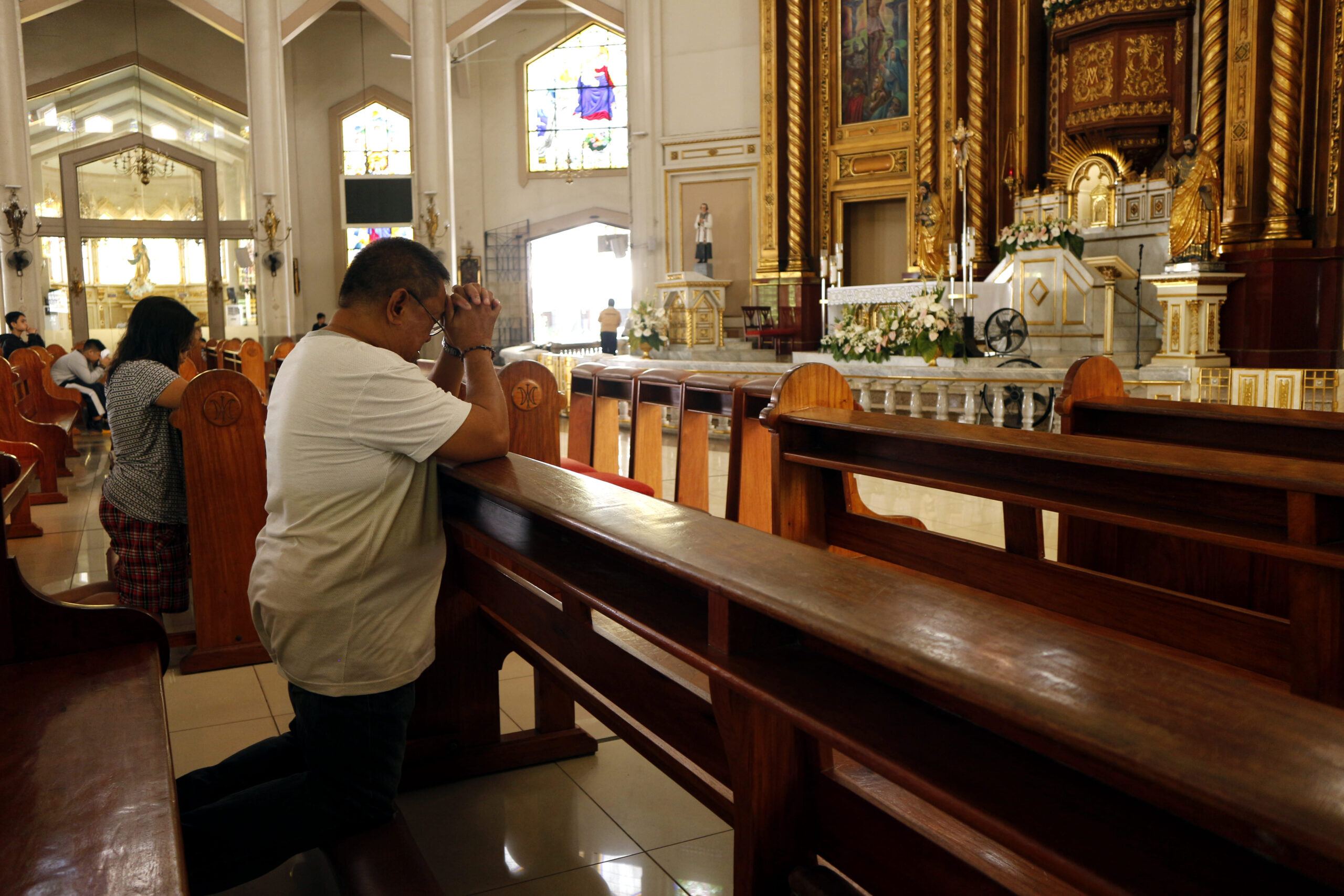
As Holy Week approaches, many Filipino families return to an enduring tradition: Visita Iglesia. For generations, this has been a way to pause, reflect, and retrace the Passion of Christ through prayer and pilgrimage.
The tradition has also become something more personal for many families. It’s a day spent traveling together and discovering places. Old stone churches, quiet town plazas, and streets that have witnessed history become part of the experience.
In Cavite, this journey feels especially meaningful. The province has a deep connection to the country’s past, with churches in Cavite often just steps away from sites tied to the Philippine Revolution. If you’re planning a Visita Iglesia this Lenten season, Cavite offers a route that is both reflective and easy to navigate.
Below is a Visita Iglesia itinerary for Cavite that blends faith and heritage with a chance to slow down and reflect.
7 Churches in Cavite for Visita Iglesia
1. St. Michael the Archangel Parish, Bacoor
Many pilgrims from Manila begin their journey in Bacoor, Cavite. The St. Michael the Archangel Parish has stood here since the 18th century and remains one of the province’s earliest Catholic foundations.
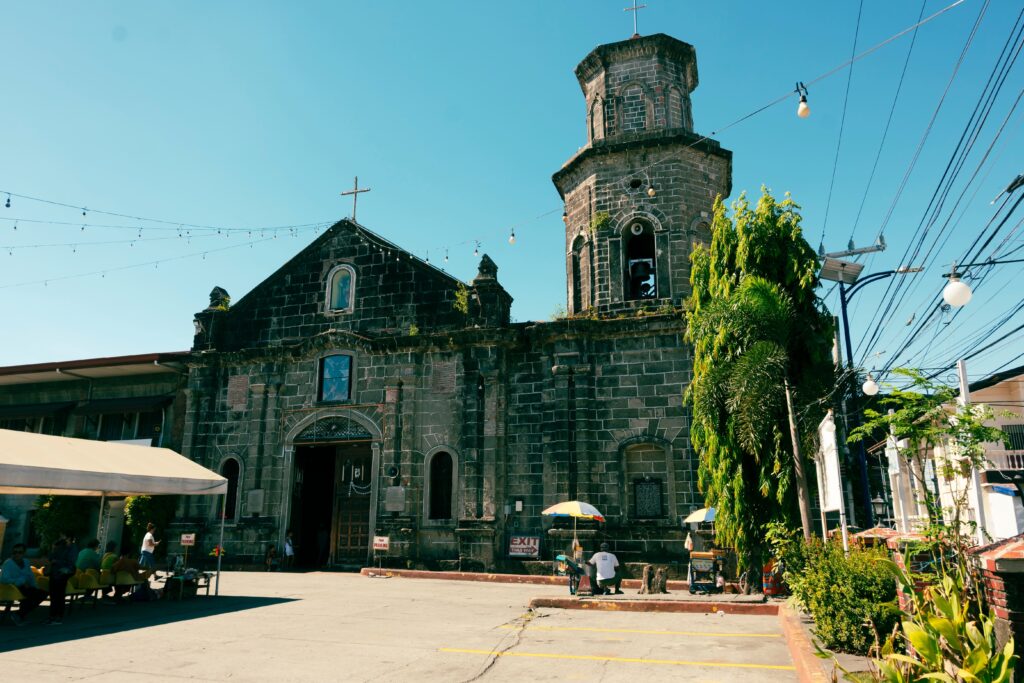
The church’s thick adobe walls and classic colonial lines give it a strength that has endured for generations. Local stories even say egg whites were used to bind the adobe stones together—a small detail that shows the care poured into its construction.
2. St. Mary Magdalene Parish Church, Kawit
A short drive further south brings visitors to the historic town of Kawit, home to the St. Mary Magdalene Parish Church.
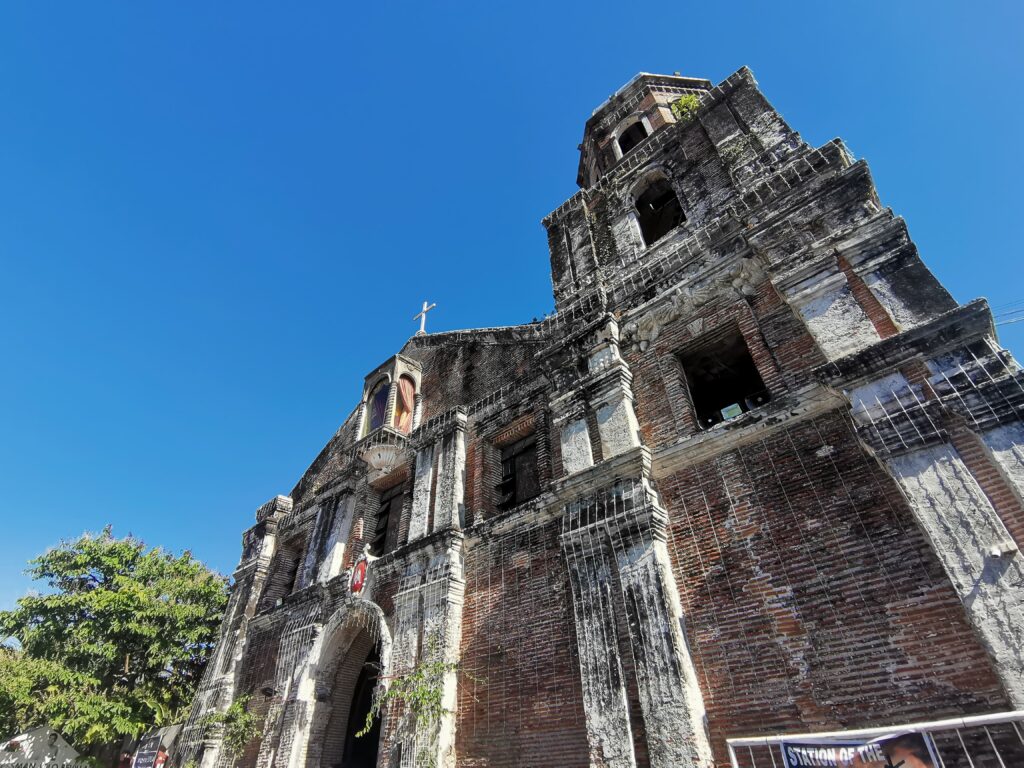
Founded by Jesuit missionaries, this Cavite church was constructed back in 1737. It also carries both spiritual and national significance. This is where Emilio Aguinaldo was baptized in 1869, linking the church to one of the most pivotal figures in Philippine history.
Despite surviving wars and structural damage over the centuries, the church continues to stand—a reminder that faith and history often walk side by side.
3. Our Lady of the Pillar Cathedral, Imus
Next on the list of churches in Cavite for Visita Iglesia is the seat of the Catholic Diocese of Imus, Our Lady of the Pillar Cathedral.
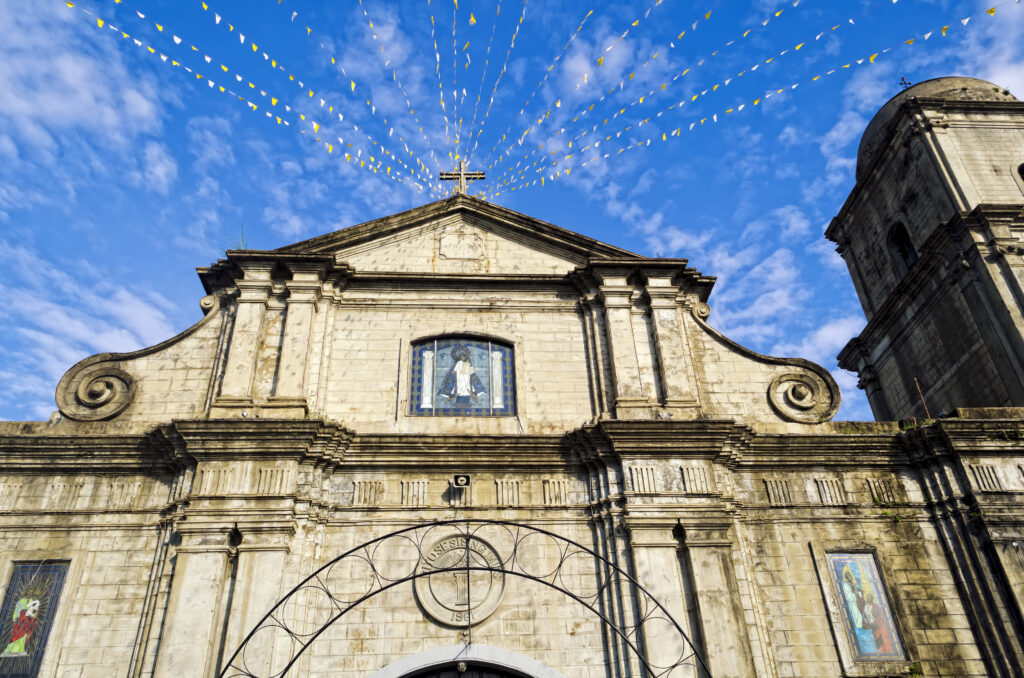
Built between 1821 and 1840, the cathedral reflects traditional Hispanic architecture, with large stone walls and a spacious interior designed for solemn gatherings. Its altars and intricate details show its importance as a spiritual center for the province.
4. Immaculate Conception Parish Church, Dasmariñas
Moving deeper into Cavite, the Immaculate Conception Parish Church stands near the city hall in the heart of Dasmariñas.
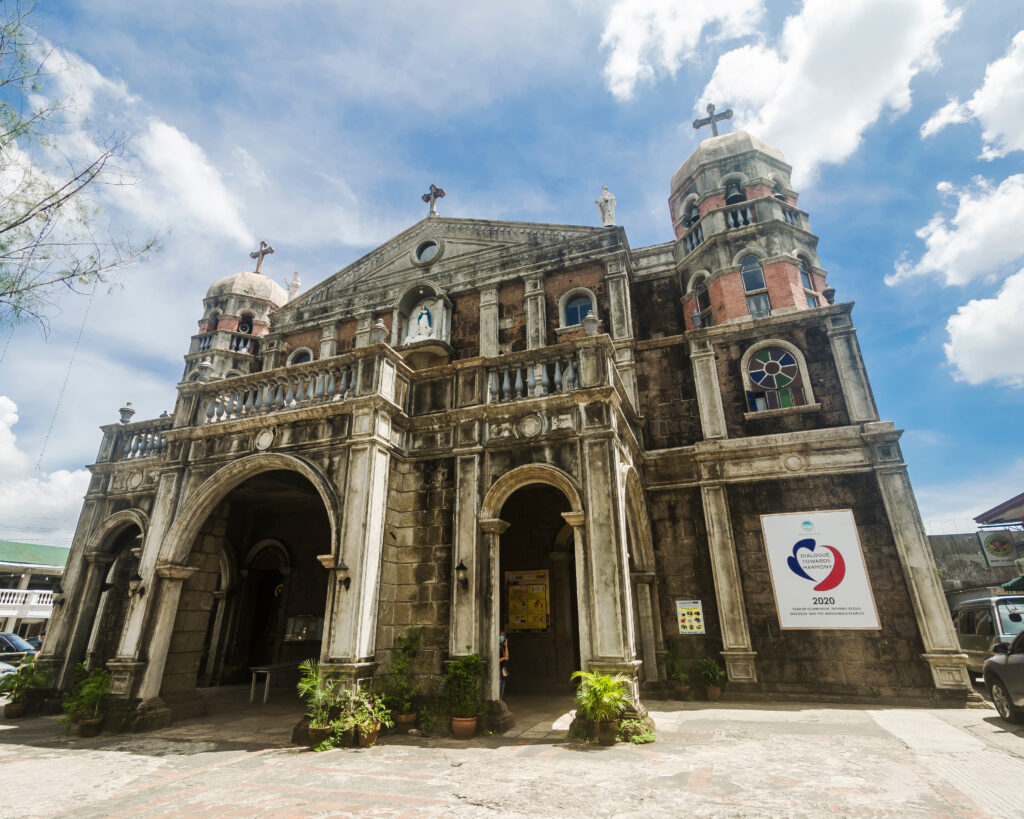
Originally constructed in 1866, the church features a simple but strong neoclassical design. Thick buttresses line its walls, built to protect the structure from earthquakes.
Beyond architecture, this Visita Iglesia Cavite church also played a role during the Philippine Revolution, making it both a religious and historical landmark.
5. Our Lady of Candelaria Parish Church, Silang
As the route continues south, Our Lady of Candelaria Parish Church offers one of the most remarkable stops in the province.
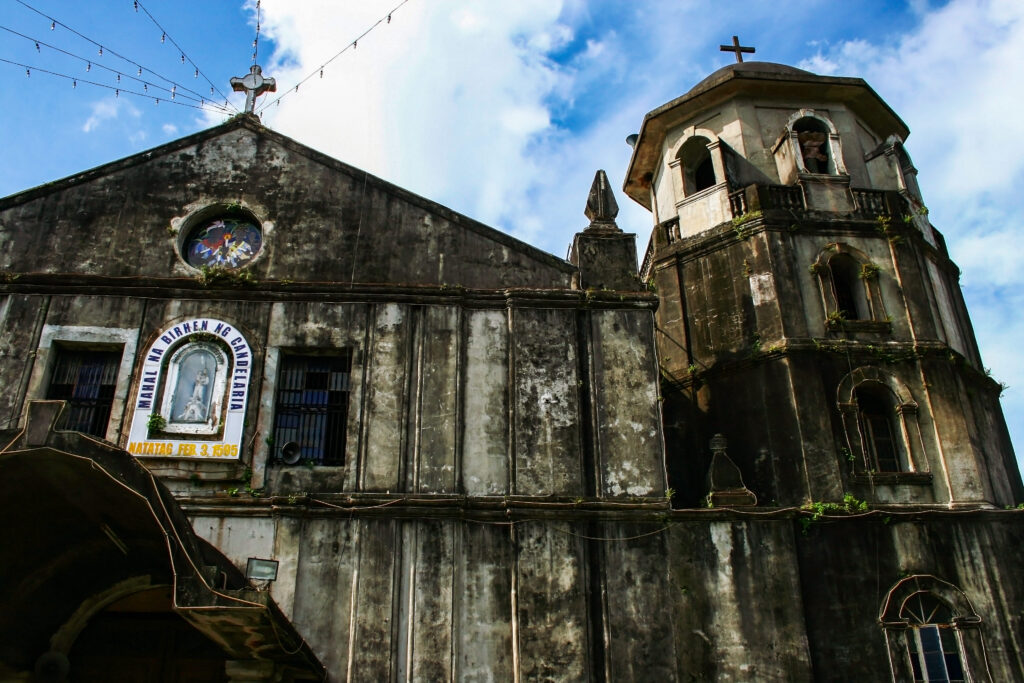
Completed in 1639, it’s considered the oldest surviving stone church in Cavite. While the exterior remains modest, stepping inside reveals extraordinary craftsmanship.
The church and its altar were both declared a National Cultural Treasure in 2017. Delicate and detailed imagery depicting the mysteries of the Holy Rosary transforms the interior into something almost museum-like, yet still deeply sacred.
6. Diocesan Shrine of the Immaculate Conception, Naic
On the way back to Manila, the municipality of Naic provides a sixth stop: the Diocesan Shrine of the Immaculate Conception.
Constructed in 1839, this church in Cavite features a semi-Gothic design inspired by the original Santo Domingo Church that once stood in Intramuros.
One of its most striking details is the bell tower, where a visible crack has been preserved from a wartime cannon strike. Instead of repairing it, the mark was left as a memorial to the church’s survival.
7. San Francisco De Malabon Parish Church, General Trias
The final church in Cavite for Visita Iglesia is found in the town plaza of General Trias: the San Francisco De Malabon Parish Church.
Established in 1611, the church holds a special place in Philippine cultural history. It was here that the historic Banda Matanda rehearsed “Marcha Filipina” before it was played during the country’s declaration of independence in 1898.
Today, the church remains an active spiritual center, with an altar adorned by statues of saints. After a full day of travel and reflection, it’s a fitting and meaningful final station.
A Different Way to Reflect
Driving around Cavite’s churches is a great way to complete your Visita Iglesia pilgrimage. Despite this, not every year calls for a long drive. With the current rise in costs due to increasing fuel prices, some families might want simpler, more meaningful ways to reflect without going too far from home.
Here are a few alternatives to Visita Iglesia that you can try:
- Bisikleta Iglesia
Visit nearby churches by bike instead of by car. It adds a bit of physical effort to your journey while keeping things simple and close to your community. It’s also a refreshing way to slow down, take in your surroundings, and reflect between each stop at your own pace. - A Pilgrimage of Charity
Spend time visiting a hospital or outreach center. Bringing food or offering support turns your Lenten reflection into a direct act of kindness. It’s a meaningful way to share your blessings while living out the spirit of compassion and care that the season encourages. - Stations of the Cross (Online or Nearby)
Join a local Stations of the Cross or follow one online. It’s a simple way to pause, reflect, and reconnect with the meaning of the season.
If you still want to visit a church in Cavite but want to save up on travel time and gas, you can also choose just one Cavite church and complete all the Stations of the Cross there.
- Walking Church Visits
Choose a neighborhood where churches are close together and visit them on foot. The slower pace gives you more time to reflect and appreciate each stop. Walking also makes the experience feel more personal and grounded throughout the day. - At-Home Prayer Time
Set aside quiet time at home for prayer and reflection. You can follow guided prayers or watch online church services to stay connected. Creating a dedicated space at home can help you focus, making your time of reflection more intentional and meaningful.
No matter how you choose to observe the season, what matters most is taking the time to pause, reflect, and reconnect. Sometimes, the simplest moments can be the most meaningful.
Cavite: The Perfect Space for Peaceful Reflection
Completing Visita Iglesia often leaves families with a sense of fulfillment. After moving from one historic church in Cavite to another, the journey becomes more than a tradition—it becomes a shared experience.
For those ending their pilgrimage in General Trias, the experience doesn’t have to end the moment the final prayer is said. Visita Iglesia shows what matters in everyday living—being close to places that bring meaning. Riverpark by Federal Land is designed with that in mind.
Located in General Trias, Riverpark puts churches, schools, parks, and daily essentials within reach. This makes it easier to stay connected to both quiet moments and busy routines, where weekend visits and daily life feel naturally integrated.
Explore the Riverpark masterplan today and see how this multi-use, masterplanned community can become your new home base.